Make your Databricks data shine with Golden
Databricks Unity Catalog has certifications, documentation, and metadata your team spent time building. Golden actually uses all of it.
If your company runs on Databricks, there's a good chance your data is in better shape than you think. Unity Catalog has been around long enough that serious data teams have done the work: documenting tables, certifying trusted assets, tagging deprecated columns, linking to internal runbooks.
That catalog is real institutional knowledge. For a lot of companies, it's the best record of what their data actually means.
If you've already built out the Gold layer of your medallion architecture, the natural next step is a Golden experience on top of it.
The surprising part is how little of that metadata reaches the analytics experience. Most BI tools connect to Databricks, read the schema, and stop. The descriptions, the certification badges, the links to documentation, all left at the door. You get essentially the same experience you'd get connecting to any database.
Golden is built differently. We use the work your data team has already done.
Search your catalog, not just your schema
Enterprise catalogs are too big to navigate by expanding folders and hoping you recognize the right table name. People search.
So Golden lets you search by table names, column names, descriptions, and the business concepts your team documented. Write a description like "subscription revenue recognized per ASC 606, excludes trial accounts," and that becomes part of how Golden understands your business when someone asks about revenue.
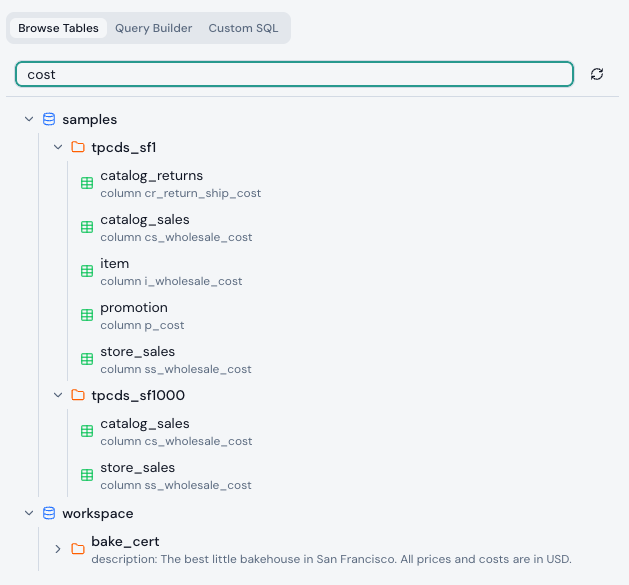
For most analytics tools, the catalog helps you find tables. For Golden, it helps the AI understand your business.
Documentation should shape the answer
A column called arr_adj might mean 5 different things. A field called created_ts might be UTC or Pacific, depending on when the table was built. This is exactly why catalog documentation matters.
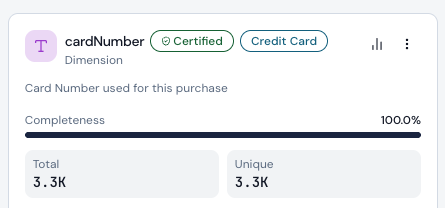
When your team writes good descriptions in Unity Catalog, Golden reads them too and uses that context to get the numbers right. Same documentation, two readers: the analyst who finds the table, and the AI that has to interpret it correctly.
Let governance do its job
Governance metadata in Unity Catalog should shape the analytics experience.
Golden prioritizes certified tables and trusted assets. The deprecated columns and datasets your team marked for retirement get pushed down. The result is simple: the governance work your data team does turns directly into better answers for everyone else.
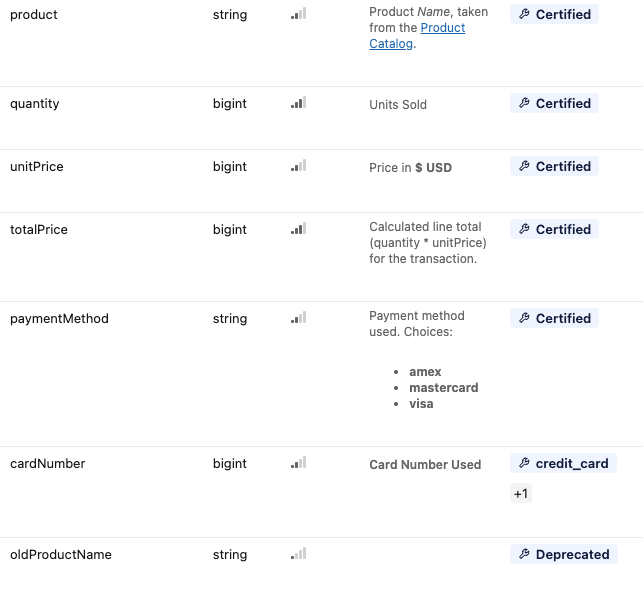
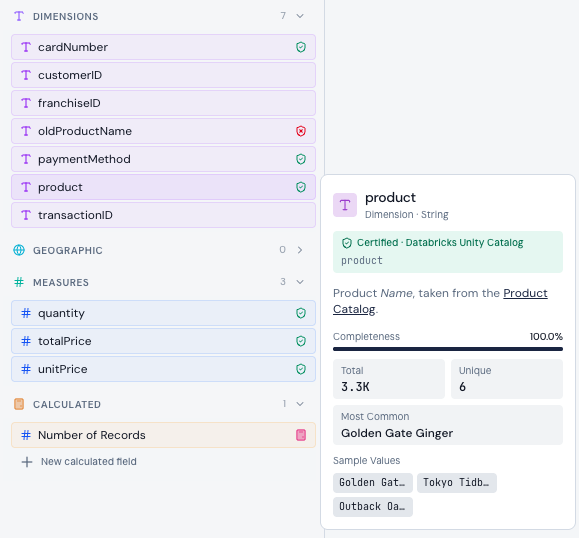
A well-governed Databricks environment and Golden work together.
Live queries. No copies.
Golden doesn't import your data, maintain extracts, or spin up another copy you have to manage. Every analysis runs live against Databricks. Your access controls stay in force because the query goes straight to Databricks, so you don't have to rebuild your governance model in another system.
The best data teams have poured enormous effort into documenting, governing, and organizing their data. With Golden, that work makes every search better, every analysis more accurate, and every answer more trustworthy.
You built a Gold layer for your trusted data. It deserves a Golden experience on top.